
Which green coffee origin fits your next container order?
Two offers can carry the same cup score and still suit different customers. Here’s a way to choose a lot you can explain to your roasting team before committing to a container.
Start with the coffee you need to make
Write one sentence before you read the origin names. For example, “We need an espresso base that keeps its cocoa character in milk at our standard roast.” For a seasonal filter release, the brief might call for a clear citrus note and a clean finish. Give the tasting team the actual use case and ask them to identify one characteristic the purchase must deliver.
Put the two offers on the same sheet
Give each lot its own column. Record the lot code, species or variety as supplied, region, harvest period and processing method. For physical grades, ask what the term measures, which standard was used and what sample weight was inspected. An identical-looking grade label from two countries may describe different criteria. Mark missing information as an open question.
Taste without the country names
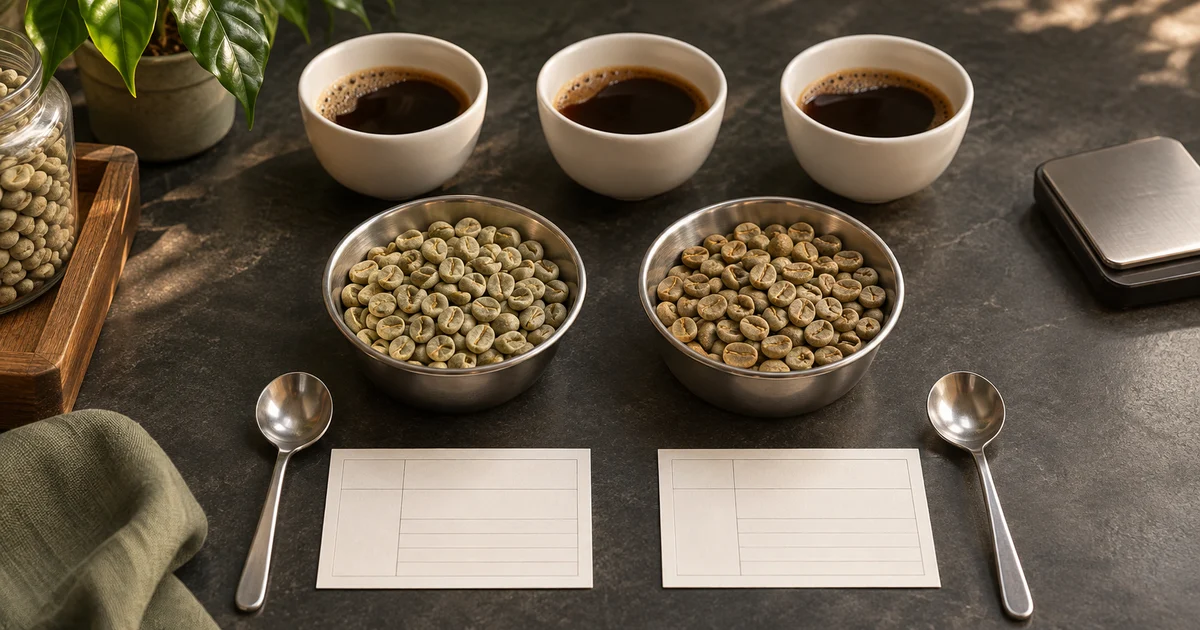
Code the samples A and B. Use the same sample preparation and tasting conditions. First write what you perceive in each cup, then record which cup fits the brief and why. The Specialty Coffee Association’s Coffee Value Assessment distinguishes sensory description from a judgement of quality. For an espresso base, follow the comparison with a trial in your own blend and milk recipe.
A worked example from a buying desk
Suppose lot A tastes of cocoa with a round body and a quiet finish. Lot B has a citrus aroma and a lighter body. These are illustrative notes for two samples, not national flavour profiles. In a trial at the intended blend ratio, the cocoa note in A stays distinct in milk. A is the stronger candidate for that brief. If the next order is for a seasonal filter, taste B in that recipe and record the result separately.
Turn the tasting note into an enquiry
Send the preferred lot code, the intended use, the point that decided the comparison and any open question. Ask the seller to identify the lot covered by the written quotation. If it changes, check the replacement against the same brief. For an MRGT enquiry, include your destination and the single origin you want quoted for a full 20-foot container.
References
- Specialty Coffee Association — Coffee Value Assessment — 19 November 2026
- International Coffee Organization — Coffee quality and grading — 19 November 2026