
Green coffee arrival checks: build a useful receiving record
A container can reach its destination before the buyer has enough information to release the coffee into usable stock. A clear receiving record connects the shipment, the physical bags and the quality review. This practical guide, reviewed on 26 November 2026, focuses on the handover at destination rather than checks before loading.
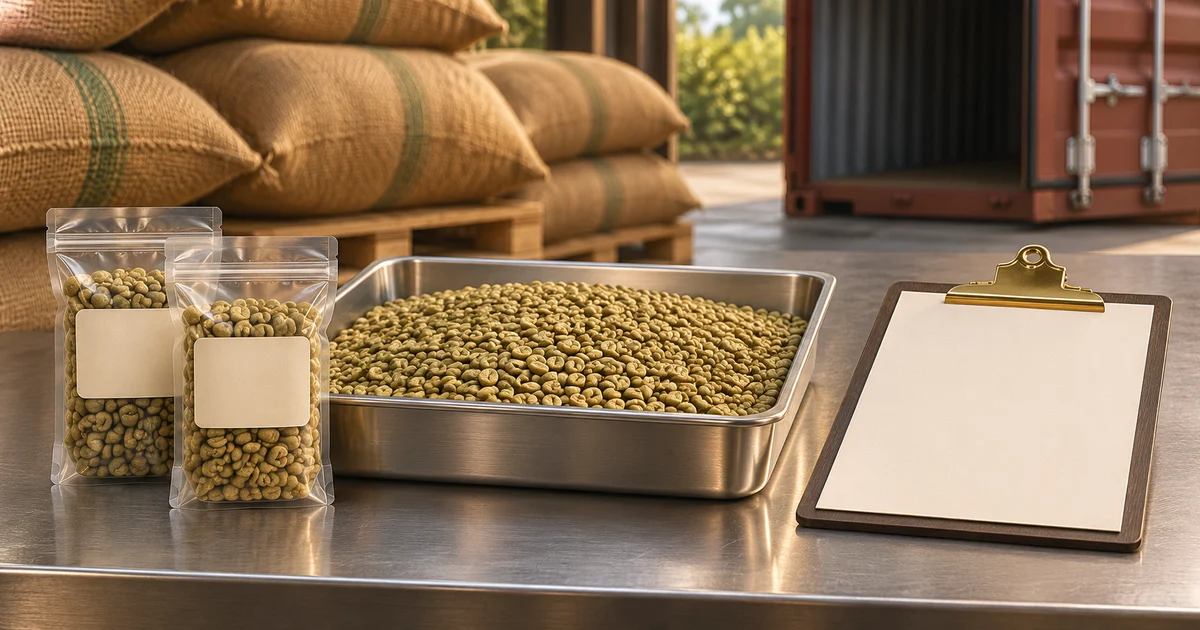
Prepare the record before the truck arrives
Assign one receiving reference and an owner for the inspection. Bring together the expected lot description, container and seal identifiers, packing list and agreed quality specification. Leave separate spaces for expected and observed quantities. This makes a difference visible without treating the paperwork as proof of the physical condition.
Agree who records observations, who reviews quality and who can authorize release. A delivery timestamp and a quality-release timestamp describe different events.
Record what can actually be observed
At the authorized handover point, record the identifiers and photograph the condition visible to the receiving team before bags are rearranged. During unloading, record bag counts and distinguish intact bags from torn, stained or otherwise unusual bags. Link close-up photographs to a wider view and a bag or position reference.
Write factual descriptions: “three stained bags in the rear row” is more useful than “bad shipment.” A photograph or an unfamiliar smell does not establish the cause, extent or safety of a problem. Flag concerns for the responsible quality team.
Keep the arrival sample traceable
The European Commission's SAMANCTA guidance emphasizes representative sampling from different parts of a consignment. One convenient handful should not stand for an entire container. Agree the sampling plan with the responsible qualified team and keep samples from distinct lots identifiable.
Record who sampled, when, the lot and bag references, the method and the sample identifier. Compare the arrival assessment with the approved reference and written specification using consistent methods. SAMANCTA is technical context here, not a statement of UAE import requirements.
Separate observations from decisions
Use a simple status such as “received, review pending,” “released” or “held for review.” Record the quantity covered by each decision and the person responsible. Do not silently blend uncertain bags into accepted stock.
Keep a discrepancy log containing the observation, evidence, affected quantity, responsible contact and next action. Follow the agreed contract procedure for any notification; this checklist does not set claim deadlines or determine liability. Preserve the original record when later findings are added.
Close the handover with an actionable summary
The final summary should state what arrived, what was checked, what remains unresolved and which stock is available to the roasting team. Attach the receiving record, labelled sample results and relevant photographs under the same reference.
For a new MRGT enquiry, specify the origin, intended use, quantity, destination and receiving requirements. MRGT handles wholesale green coffee from one single-origin 20-foot container, approximately 19.2 tonnes or 320 bags of 60 kg. Availability and CIF, FOB or Ex-Works delivery terms are confirmed in the written quotation.
Discuss your container requirements · Explore green coffee origins