
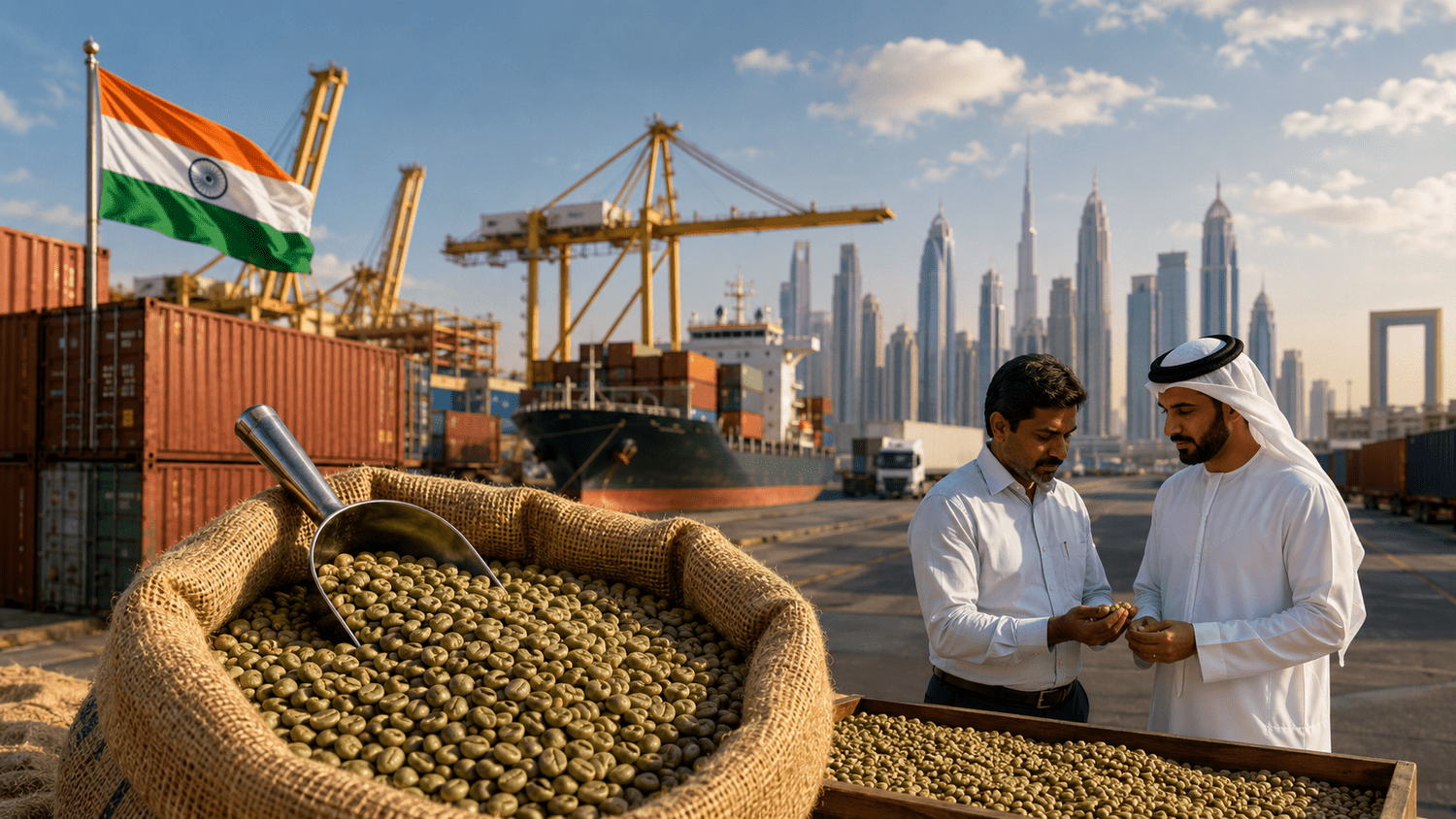
India's coffee exports are on the rise, driven by growing demand for Robusta in the GCC region, with buyers seeking container-scale sourcing and competitive CIF Jebel Ali prices.
Introduction to India's Coffee Export Market
India's coffee export market has experienced significant growth in recent years, with the country positioning itself as a major player in the global coffee trade. This growth is largely driven by the increasing demand for Robusta coffee in the Gulf Cooperation Council (GCC) region.
Robusta Demand in the GCC
The GCC region, comprising countries such as the United Arab Emirates, Saudi Arabia, and Kuwait, has seen a surge in demand for Robusta coffee. This demand is fueled by the growing popularity of instant coffee and the need for a consistent supply of high-quality beans. As a result, buyers in the GCC are seeking container-scale sourcing options to meet their requirements.
Container-Scale Sourcing and CIF Jebel Ali
To capitalize on this demand, Indian coffee exporters are offering container-scale sourcing options, with prices quoted on a Cost, Insurance, and Freight (CIF) Jebel Ali basis. Under CIF Jebel Ali (Incoterms® 2020), the seller pays for freight and the required minimum cargo insurance to the named destination port. Risk transfers to the buyer when the goods are loaded on board the vessel at the port of shipment. Import clearance and onward delivery are separate responsibilities to confirm in the contract. Buyers should agree the named ports, insurance cover and any additional charges before ordering. See the ICC Academy explanation of CIF and risk transfer.
Commercial-terms explanation updated 21 October 2026. The original market commentary and publication date are retained.
Supplier Diversification and Sourcing Strategy
In order to mitigate risks and ensure a stable supply of high-quality coffee, GCC buyers are adopting a diversification strategy, sourcing coffee from multiple suppliers in India and other producing countries. This approach enables buyers to negotiate better prices, improve quality control, and reduce their dependence on any one supplier.
Indian coffee exporters are investing in quality control programs to meet the stringent requirements of GCC buyers.
Buyers are prioritizing suppliers who can offer consistent quality, competitive pricing, and reliable logistics.
Strong relationships between buyers and suppliers are crucial in ensuring a smooth and efficient sourcing process.
Conclusion
In conclusion, India's coffee exports are poised for further growth, driven by the increasing demand for Robusta in the GCC region. By offering container-scale sourcing options, competitive CIF Jebel Ali prices, and prioritizing supplier diversification, Indian coffee exporters can capitalize on this trend and establish themselves as major players in the global coffee trade.
For buyers in the UAE and the GCC: see how MRGT works as a green coffee supplier in the UAE, from UAE stock or shipped from origin.
Send this market note to a buyer or colleague.